Astromaterials Research & Exploration Science
METEORITE FALLS

CZ-4C ROCKET BODY RE-ENTRY MINNESOTA

CZ-4C ROCKET BODY RE-ENTRY MINNESOTA

CZ-4C ROCKET BODY RE-ENTRY MINNESOTA

DATE/TIME

1/24/2026 @ 0620 UTC

1/24/2026
0620 UTC

LAT/LONG

46.62914 • -93.23138

46.62914
-93.23138

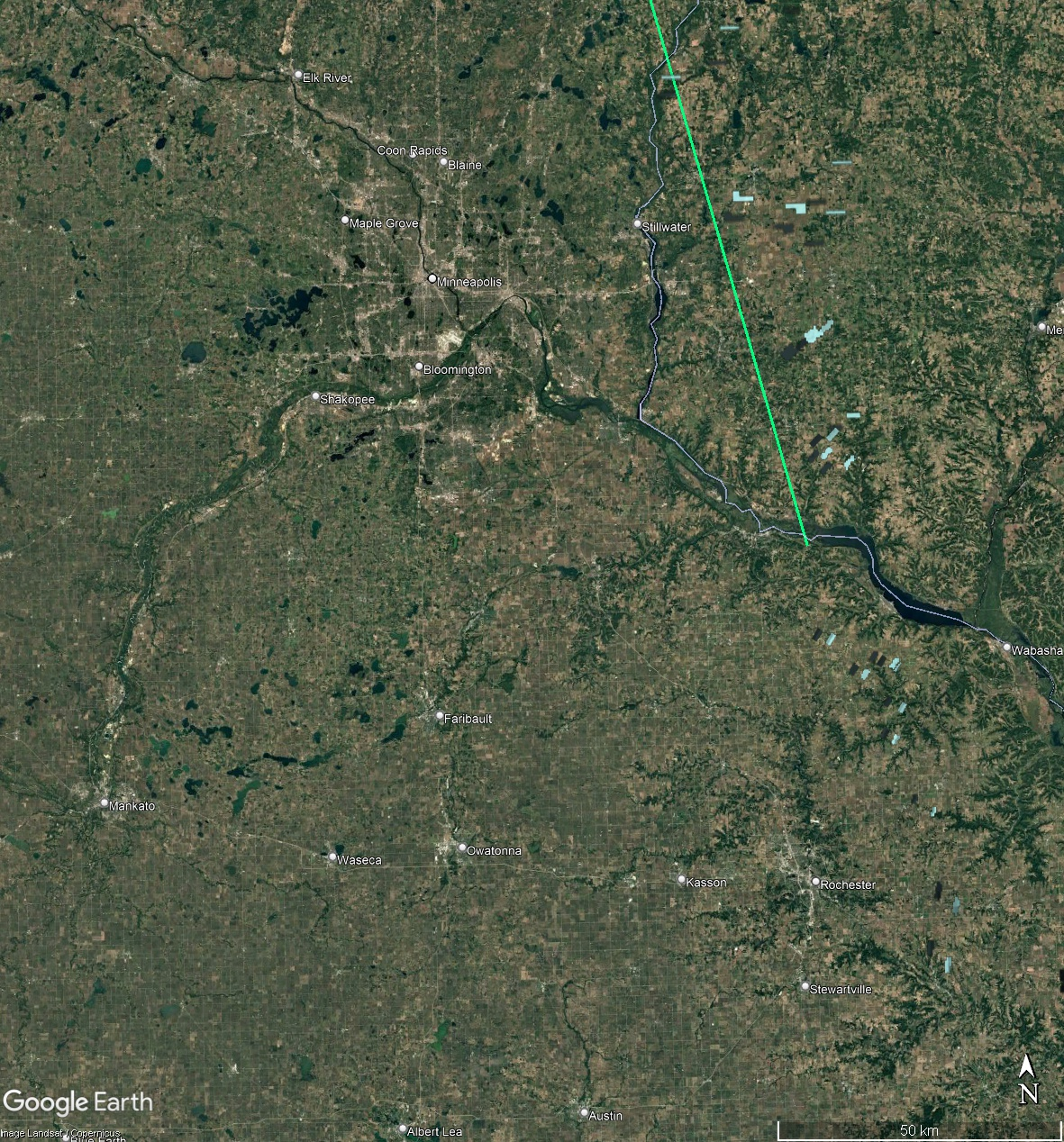
Composite radar image showing ground track (green line) and radar signatures of falling debris (light blue pixels). Dark pixels around Duluth are radar noise.

STREWN FIELD

Composite radar image showing ground track (green line) and radar signatures of falling debris (light blue pixels). Dark pixels around Duluth are radar noise.

SUMMARY

This event was the re-entry of a rocket body from a Chinese CZ-4C rocket. This rocket originally launched the Ludi Tance 1-01A radar Earth observation satellite on 26 January 2022. 

The rocket body disintegrated as it re-entered the Earth's atmosphere over the US/Canada border, moving towards the southeast. NOAA weather radar data shows debris from the rocket body in a line extending between Duluth and Minneapolis, down into eastern Iowa. 

A cluster of radar signatures near the US/Canada border probably represents lightweight material such as insulation. Further south along the track, four objects appear west of Duluth with strong radar signatures. Given their position along the track and their persistent strong radar signatures, these objects may be Composite Overwrapped Pressure Vessels (COPVs), lightweight tanks for fuel or pressurizing gas. Lightweight debris from the event is observable on radar passing over Duluth and moving over Lake Superior in accordance with west-to-east prevailing winds.

Additional radar signatures appear in a track extending east of Minneapolis and further into eastern Iowa. Debris found farther south along the ground track should be composed of more massive pieces of the rocket, such as rocket motor components. Debris may be lying on the ground surface or may be embedded in the ground, depending on the size and weight of the individual components.

Before handling any debris from this event, be advised that the CZ-4C uses hydrazine+nitrogen tetroxide fuels with significant toxicity concerns. These compounds may or may not be present in the debris.
LEARN MORE

RADAR & MAPS

Zoomed in detail of falling debris east of Minneapolis

RADAR SUMMARY

Zoomed in detail of falling debris east of Minneapolis

GET DIRECTIONS

Click on the View larger map link that is displayed in the address box above in order to get directions to the strewn field area.

EVENTS TO DATE

Learn more about other fall events and possible landing sites that have been identified across the United States.

EVENT UPDATES

Find out more about recent searches and possible discoveries that have taken place around the United States.

METEORITES 101

This step-by-step guide will show you how to locate possible meteorite fall sites using radar software and weather data along with info provided by reporting agencies and monitoring systems.
These instructions will show you how to best preserve the meteorites you discover and how to make contact with the organizations that are willing to accept and analyze your find.
Don't know exactly what a meteorite is, what they are made of or where they come from? If that's the case, we have provided a mini-"crash" course in what you need to know about them.
It turns out that meteorites have provided us a lot of scientific insight, not only into the origins of our solar system and planet Earth, but what the future might hold for mankind.
There's a lot going on in the study of meteorites, both here at NASA and in other places. Here are a few links to the people and institutions who are leading the research in this field.
This website is best viewed in landscape mode on tablet devices.
THANK YOU!
This website is best viewed in portrait mode on mobile devices.
THANK YOU!
This website is best viewed in portrait mode on mobile devices.
THANK YOU!