Astromaterials Research & Exploration Science
METEORITE FALLS

COCKBURN ISLAND ONTARIO

COCKBURN ISLAND ONTARIO

COCKBURN ISLAND ONTARIO

DATE/TIME

6/20/2026 @ 0008 UTC

6/20/2026
0008 UTC

LAT/LONG

45.939476 • -83.324361

45.939476
-83.324361

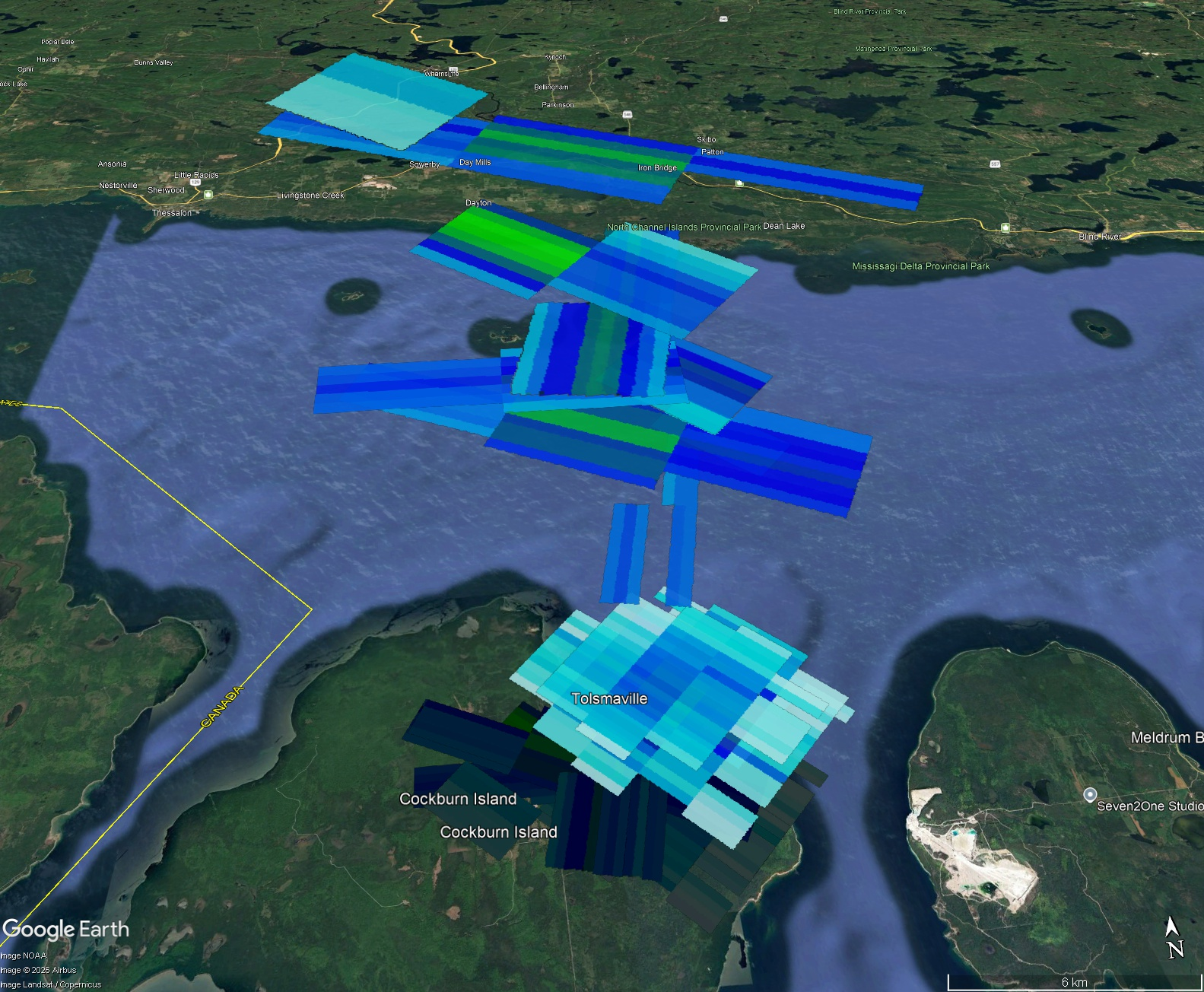
Composite radar image of falling meteorites, seen from perspective view looking towards the north.

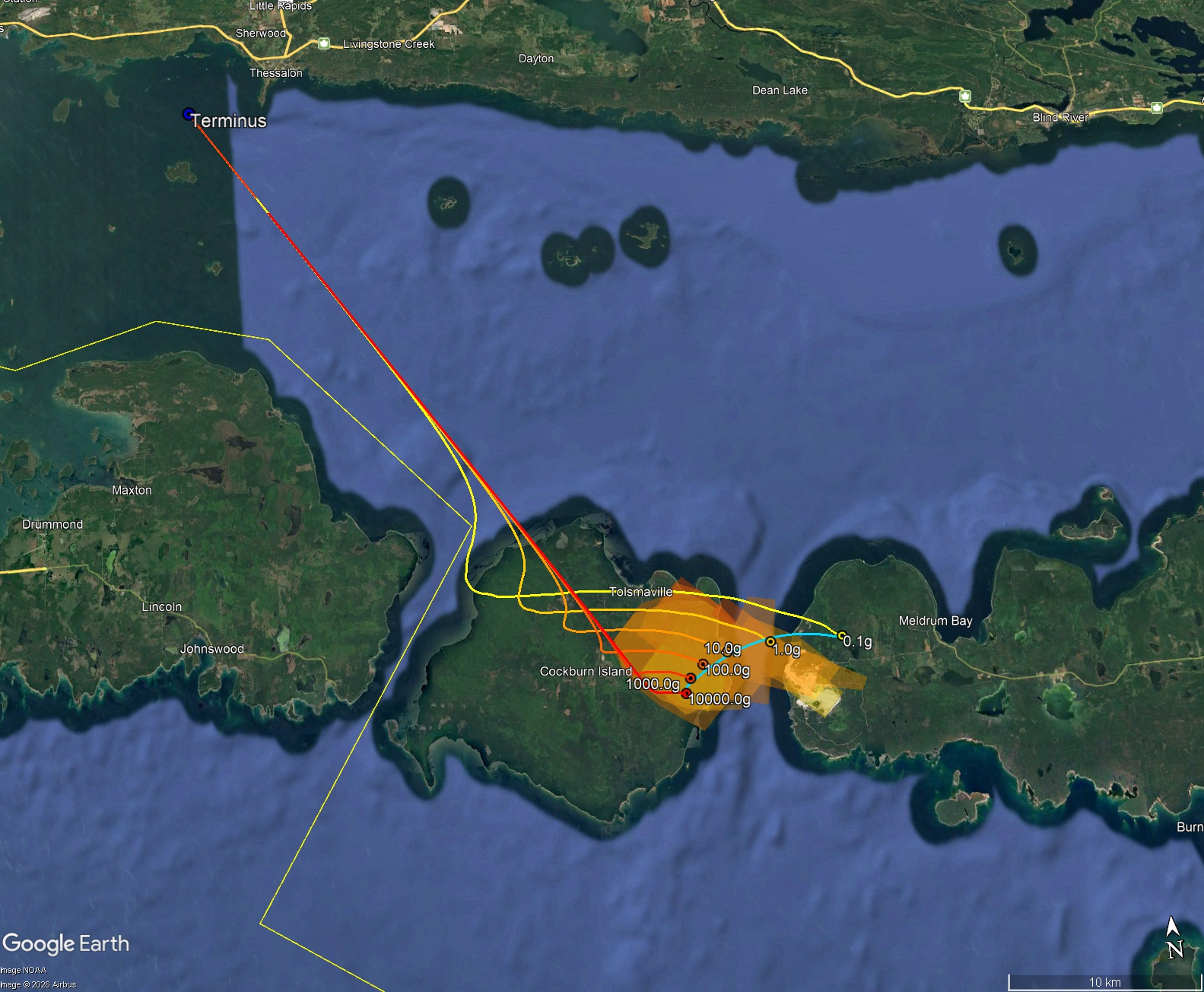
STREWN FIELD

Composite radar image of falling meteorites, seen from perspective view looking towards the north.

SUMMARY

Update (22 June 2026): Strewn field map added here. Winds at the time of the fall ranged up to 30 m/s (67 mph) but changed direction by 90 degrees around 20 km altitude. The resulting flight paths of falling meteorites are almost a spiral, with a high concentration of meteorites landing in a small area centered on the road passing through approximately 45.9225 -83.2893. Basically, meteorites landed on the eastern end of the island. Some very small (>1g) meteorites landed in the dolomite quarry across the lake.
The flight paths shown here are for hypothetical meteorites. Just because there is a 10 kg meteorite shown on the map does not necessarily mean there is a 10 kg meteorite on the ground.

Signatures of falling meteorites are seen in eighteen radar sweeps from four different NEXRAD radars. High reflectivity values indicate this was a relatively high mass fall.
LEARN MORE

RADAR & MAPS

Composite radar image of falling meteorites, seen in perspective and looking towards the north.

RADAR SUMMARY

Composite radar image of falling meteorites, seen in perspective and looking towards the north.

GET DIRECTIONS

Click on the View larger map link that is displayed in the address box above in order to get directions to the strewn field area.

EVENTS TO DATE

Learn more about other fall events and possible landing sites that have been identified across the United States.

EVENT UPDATES

Find out more about recent searches and possible discoveries that have taken place around the United States.

METEORITES 101

This step-by-step guide will show you how to locate possible meteorite fall sites using radar software and weather data along with info provided by reporting agencies and monitoring systems.
These instructions will show you how to best preserve the meteorites you discover and how to make contact with the organizations that are willing to accept and analyze your find.
Don't know exactly what a meteorite is, what they are made of or where they come from? If that's the case, we have provided a mini-"crash" course in what you need to know about them.
It turns out that meteorites have provided us a lot of scientific insight, not only into the origins of our solar system and planet Earth, but what the future might hold for mankind.
There's a lot going on in the study of meteorites, both here at NASA and in other places. Here are a few links to the people and institutions who are leading the research in this field.
This website is best viewed in landscape mode on tablet devices.
THANK YOU!
This website is best viewed in portrait mode on mobile devices.
THANK YOU!
This website is best viewed in portrait mode on mobile devices.
THANK YOU!