OSIRIS-REx News
Nicole Lunning, OSIRIS-REx Curator
Volume 8 No. 2 • October 2026
This newsletter marks another major transition for the collection with the completion of the mission sample analyses phase and the OSIRIS-REx mission overall on September 30, 2026. Following the end of mission, we have the largest expansion of the NASA OSIRIS-REx catalog with this newsletter through the addition of samples and splits made post-allocation by the mission sample analysis team (SAT), which have been returned to the collection (marked as Y for sample returned by investigator), reported as consumed/destroyed/entirely subdivided (labelled as consumed and can be excluded from catalog searches with a check box), or a limited number of samples that were approved for loan extensions (< 9 months) through a peer review process. About 1200 samples/splits have been added to the catalog with this newsletter; 426 of these samples/splits were reported as consumed, destroyed or entirely subdivided. The curation and the ARES IT teams have worked incredibly hard to process, document, record, and support data transfer to the public site so quickly after the end of mission. This work has taken up a substantial portion of the bandwidth of the OSIRIS-REx processing team for the last six months, but we have continued to allocate samples for approved requests and review new samples requests.
The samples returned from investigators are available for the whole community to request.
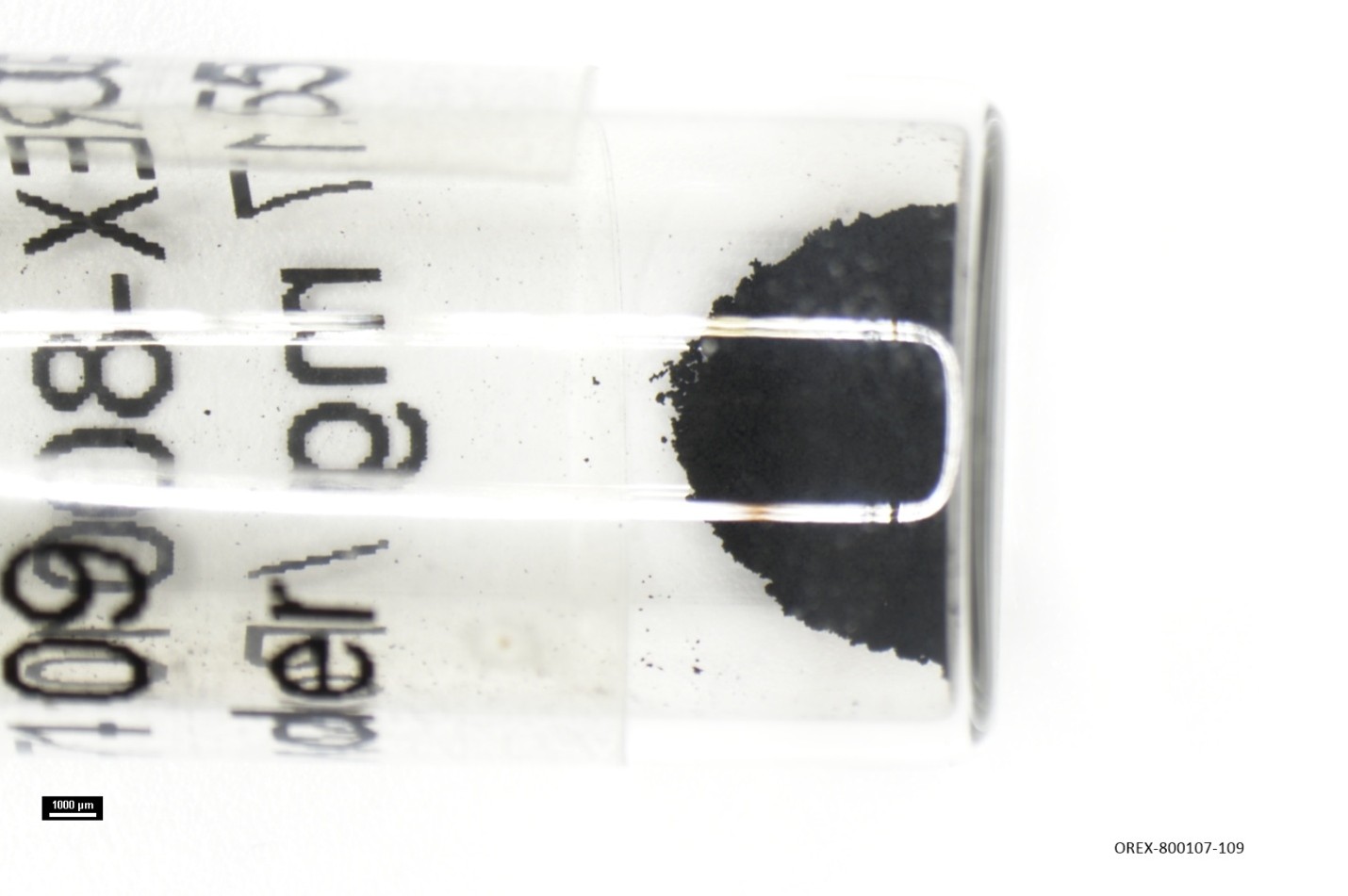
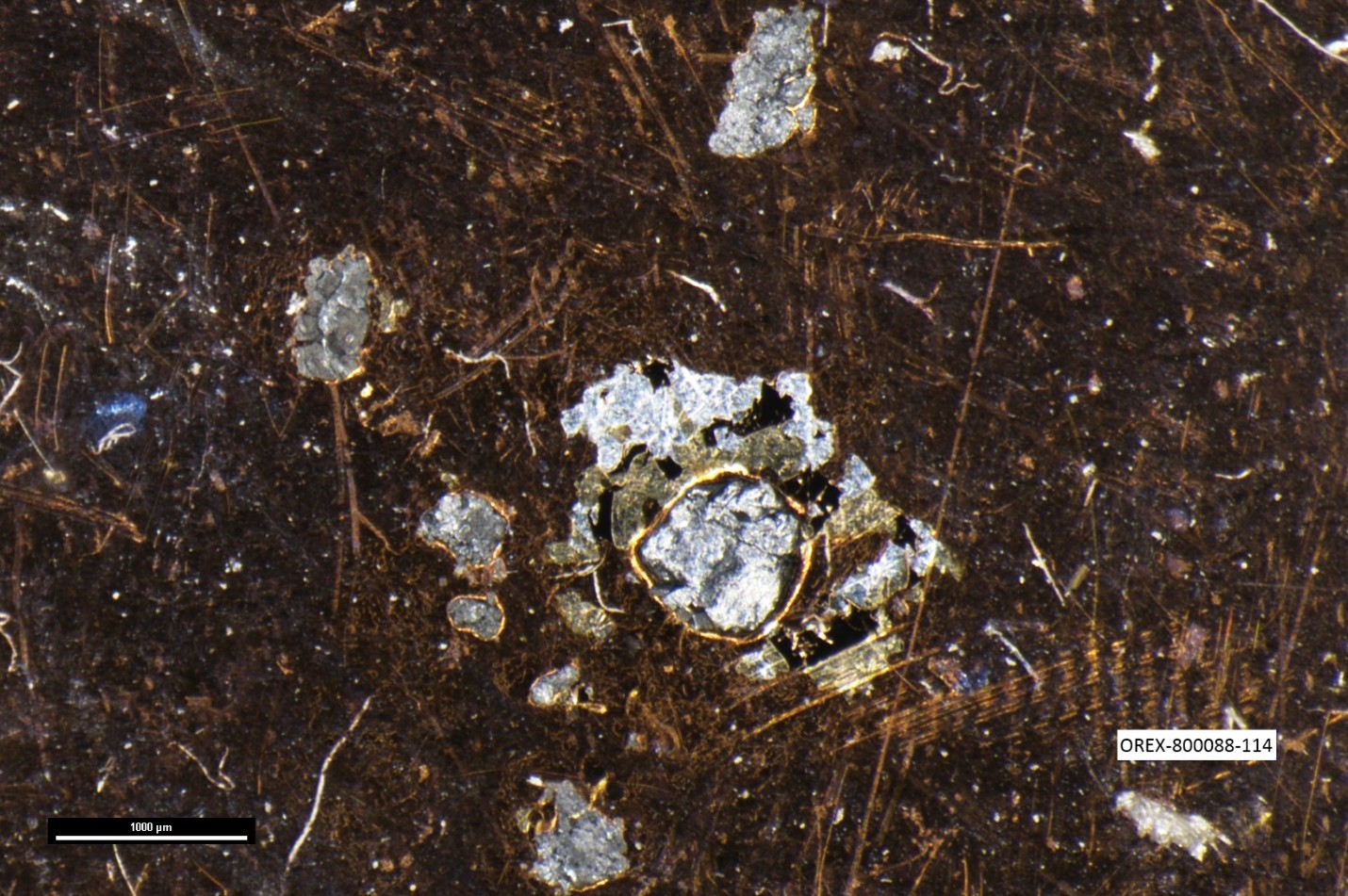
We encourage the community to consider requesting these samples since they do not require making new Bennu samples non-pristine. These samples include
many Bennu samples mounted on SEM studs, relatively small mass aggregate samples, numerous other types of small mass samples, a variety of residues, samples that have been physically/chemically altered, and some polished thick sections (Figures 1 and 2).
We added X-ray Computed Tomography (XCT)-based classifications for 87 particles.
These classifications were developed from the first 59 XCT scans of particles while keeping them pristine in nitrogen; a manuscript on this classification
scheme with lead author Scott Eckley was accepted by Meteoritics & Planetary Science in summer 2026 (link will be added to relevant catalog entries when the paper goes online). XCT scans are a valuable resource for understanding Bennu particles while
keeping them curation pristine. We have continued to slowly and steadily XCT scan samples under pristine conditions. We continue our shift towards XCT scanning more moderately sized particles, which can be more readily allocated to fulfill sample requests.
We are announcing XCT scans of an additional 15 particles since the last newsletter for a collection total of 87 particles XCT scanned under pristine conditions (some of which have subsequently been subdivided and/or allocated). The following samples were
XCT scanned since the last newsletter: OREX-800053-0; OREX-800056-0; OREX-800094-0; OREX-800225-0; OREX-800226-0; OREX-800230-0; OREX-800231-0; OREX-800234-0; OREX-800245-0; OREX-800247-0; OREX-800258-0; OREX-800269-0; OREX-800272-0; OREX-800273-0.
The next sample request deadline for OSIRIS-REx samples curated by NASA will be Monday December 14, 2026. For our sample request deadline cadence, this is the second deadline of the year 2026. The curation team is actively working on processing samples for approved sample requests from the third and fourth review rounds.
If you are considering submitting a sample request for this round and have questions, please feel welcome to reach out via email to the collection curator (Dr. Nicole Lunning).