Hayabusa2 News
Christopher Snead, Hayabusa2 Curator
Volume 8 No. 1 • May 2026
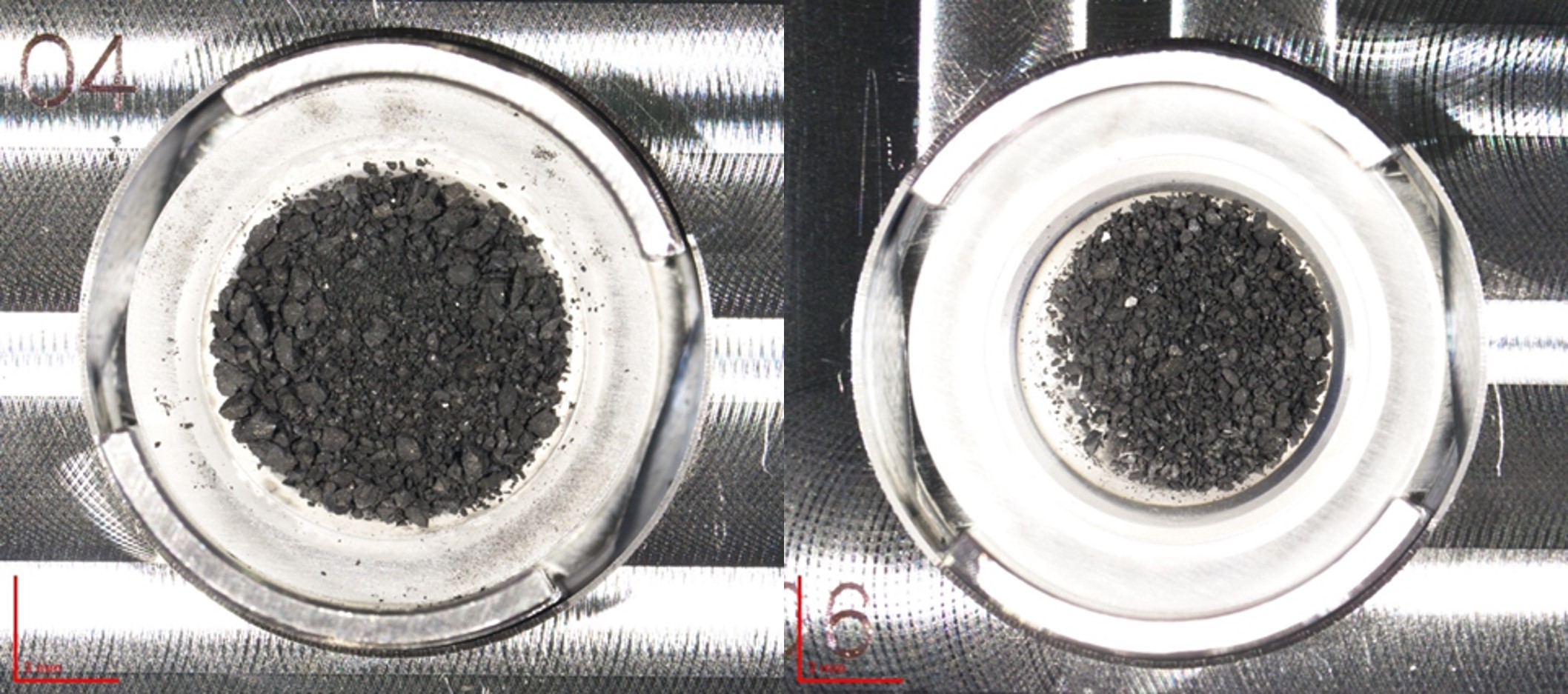
The Hayabusa2 curation team continues to work towards the subdivision of the aggregate samples A0217 and C0206 (Figure 1). This initial processing activity is being conducted at the recommendation of the Asteroid Subcommittee of the Extraterrestrial Materials Analysis Group (ExMAG). We will reserve ~50% of each aggregate sample for bulk sample analysis requests; the remaining 50% will be used to fulfill requests for individual particles and aliquots of regolith. The two aggregate samples to be initially subdivided are samples that JAXA has categorized as class 2 ABA samples – these samples were in contact with the clean chamber surfaces. Upon successful completion of the sample subdivision, the curation team will use the split samples to fulfill the collection's first approved sample request.
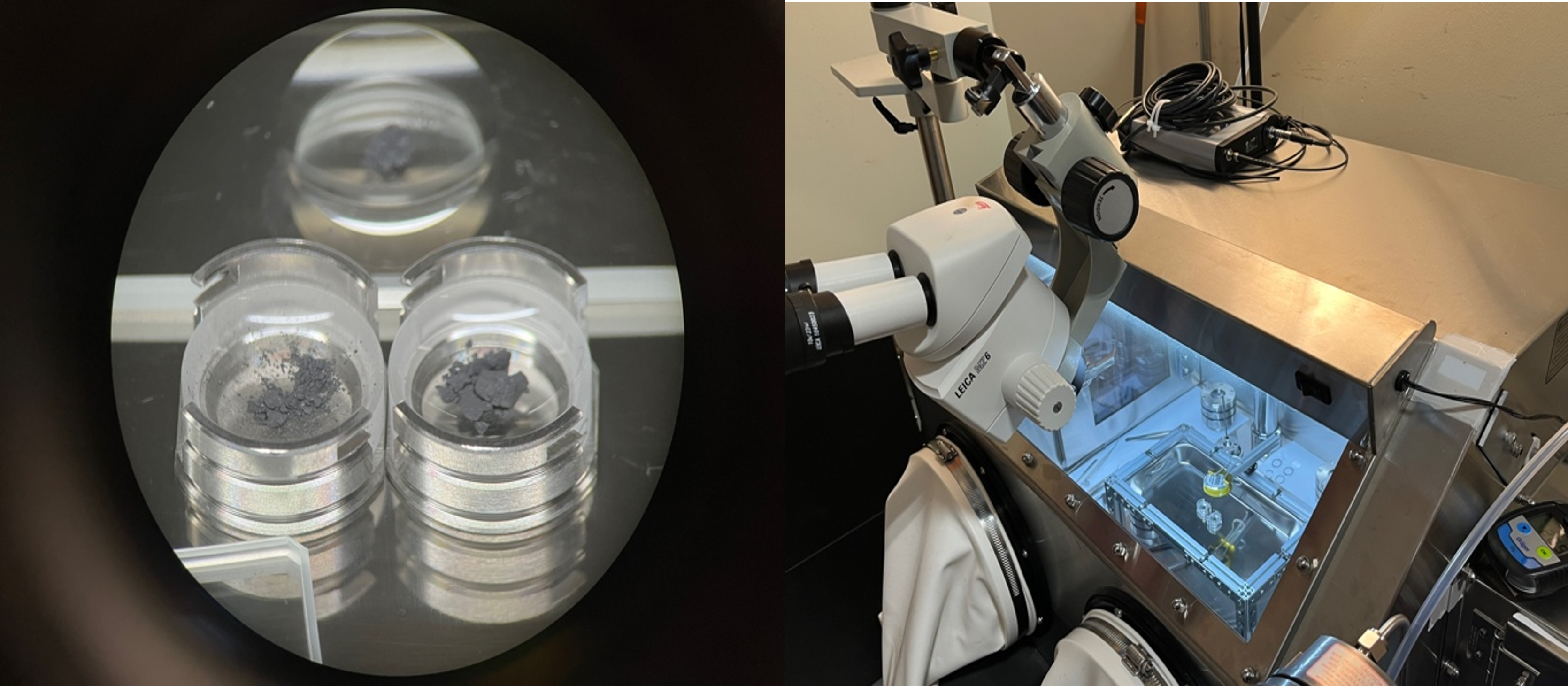
Major equipment required for conducting this sample split has been installed into the glovebox. This equipment includes: a Mettler-Toledo analytical balance that has been modified to encapsulate the electronics in a materials-compliant housing; a vacuum tweezer system capable of manipulating Ryugu grains and small hardware; a fixture that support disassembly of Facility-to-Facility Transfer Containers (FFTCs); a dual sample support tray that enables photo documentation and ergonomic sample processing; LED illumination for the glovebox main working volume and the sample observation port; a Leica M80 stereo zoom microscope equipped with a 10MP digital camera that enables sample processing and photo documentation under magnification; and numerous sample processing aliquoting tools for performing aggregate sample subdivision. We have also developed a plan to mitigate triboelectric charge accumulation of the samples by introducing a Po-210 source into the glovebox for the subdivision operations.
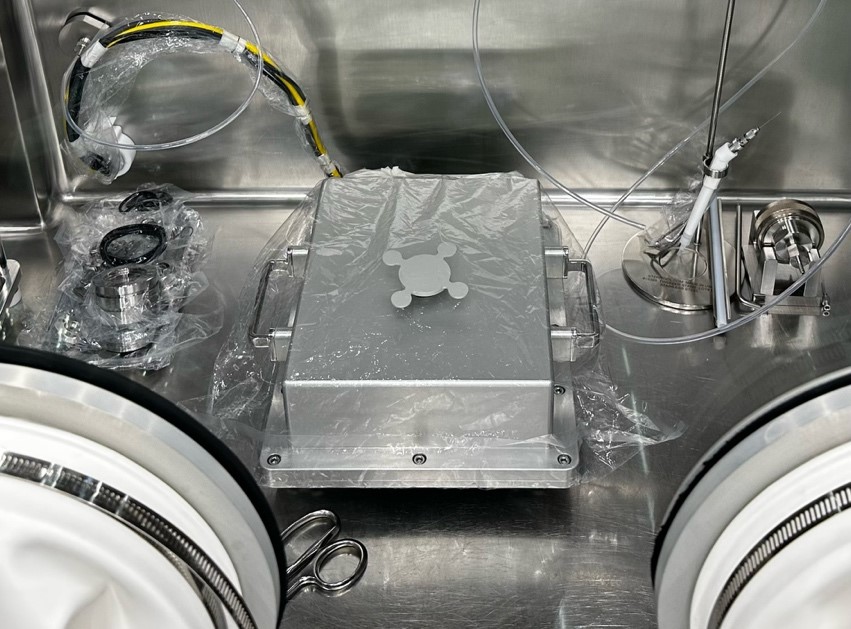
The Hayabusa2 processing team has been conducting numerous sample processing rehearsals in preparation of the aggregate subdivision. These rehearsals include in situ rehearsals using 1 mm glass beads as a materials-compliant "simulant" as well as rehearsals with asteroid regolith simulant conducted in a small nitrogen-purged glovebox outside of the Hayabusa2 cleanroom. During these rehearsals the processors test the performance of candidate sample aliquoting tools and develop best practices.