Genesis News
Jemma Davidson, Astromaterials Curator
Volume 7 No. 3 • November 2025
Genesis Curator Retirement
Judith Allton (Figure 1), NASA's first Genesis Curator, retired in August 2025 after more than 50 years of dedicated service
to the Curation Office. Beginning her NASA career in 1974 after working at the Texas Water Quality Board in the Environmental
Protection Agency lab, Judy played a role in the handling of Apollo 16 soil samples and went on to become a cornerstone of
astromaterials curation. Her meticulous work ensured the preservation and scientific integrity of extraterrestrial samples,
particularly those returned by the Genesis mission - NASA's first solar wind sample return effort. Over the last two decades,
she championed the scientific value of Genesis samples, including hosting an annual Genesis workshop, and most recently leading the
organization of a special session at the 2025 Lunar and Planetary Science Conference. Judy's passion for planetary science and meticulous
attention to contamination control made her a respected and appreciated figure in astromaterials curation. Known as the unofficial historian of curation,
Judy's deep knowledge spanned Apollo-era tools to modern contamination control protocols. She also maintained the ultra-pure water system critical to
curation operations. Beyond her technical contributions, Judy brought creativity and warmth to the team as an artist and storyteller, often sharing sunrise
photos that lifted spirits. Her legacy leaves an indelible mark on planetary science and the NASA community. We extend our deepest gratitude to Judy for her
extraordinary service and lasting impact on the field of astromaterials curation.
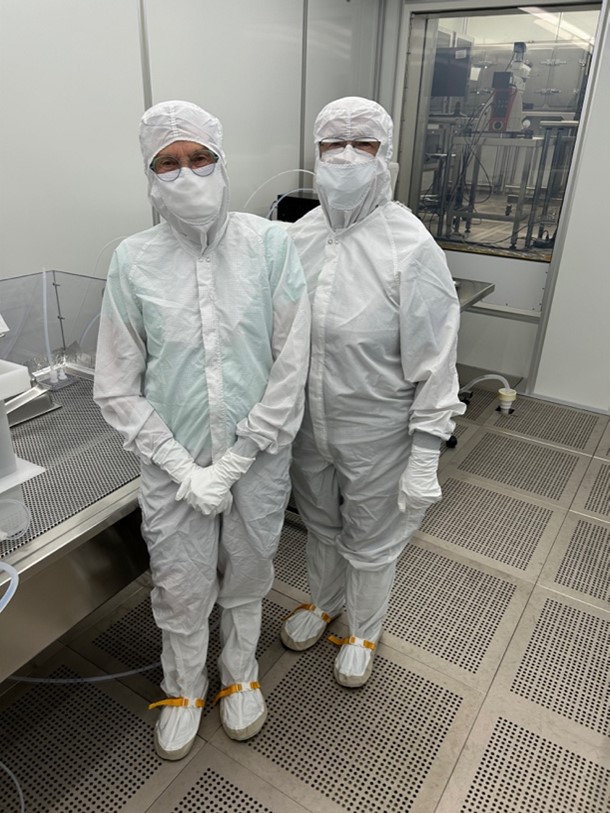
Figure 1: Genesis Curator Judith Allton (left) and ARES Division Chief Dr. Eileen Stansbery (right) in the Genesis Laboratory, August 2025.
New Genesis Curator Appointment
Effective mid-November, Dr. Alissa Madera (Figure 2) will assume stewardship of the Genesis Collection as the next Genesis Curator. Alissa brings a strong foundation in astromaterials curation,
having most recently served as the Astromaterials Curation Deputy-a role she will continue alongside her new responsibilities. In this capacity, she has closely shadowed collection curators, contributed
to critical curation activities, and played a key role in ensuring compliance with NASA Procedural Requirements (NPR) 7100.5. Her experience and dedication position her well to carry forward the legacy of
excellence in Genesis sample preservation.
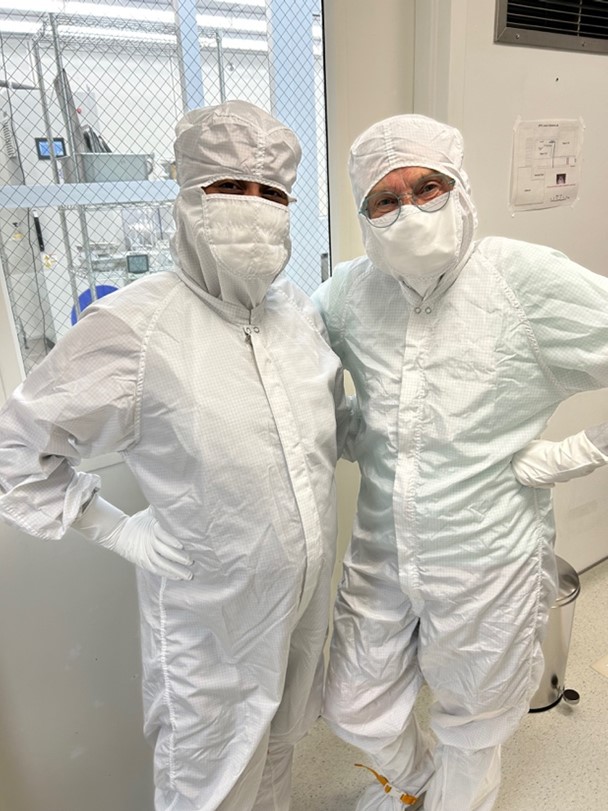
Figure 2: Genesis Curators Dr. Alissa Madera (left) and Judith Allton (right) in the Genesis lab suite.
Genesis Preservation Mode
After careful evaluation of work priorities, resources, and budget constraints, the decision was made this summer to transition the Genesis Collection from an active collection into preservation-mode.
This decision reflects a thoughtful response to the evolving landscape of scientific demand and resource allocation. Over the past two decades, the Genesis Collection has been a valuable resource for
planetary science, contributing significantly to our understanding of the Sun and the Solar System. However, with a notable decline in both active Genesis Principal Investigators and new sample requests,
this transition ensures the sustainability of NASA's broader scientific goals, including future sample return missions. While in preservation-mode, the Genesis Collection will continue to be safeguarded,
with existing loan agreements honored and returned samples accepted, though no new allocations or characterization work will be undertaken. The transition was formerly announced in a special edition of the
Astromaterials Newsletter (Vol. 7 No. 2, July 2025), and final requests were accepted through September 5, 2025. Four PIs submitted requests,
which will be processed through the Astromaterials Allocation Review Board. The Curation Office remains committed to the long-term integrity of the Genesis Collection and may consider reopening for requests during future allocation windows.
For questions, the Astromaterials Curator remains the point of contact.